Buying guide
Buying used: the first hour of an inspection
Most expensive mistakes in the used market are visible within sixty minutes, if you know the order to look in.
- Time needed
- 60–90 min
- Tools
- Damp meter, torch
- Cost of survey
- £250–£450
- Risk avoided
- £3,000+
Start outside, at the seams
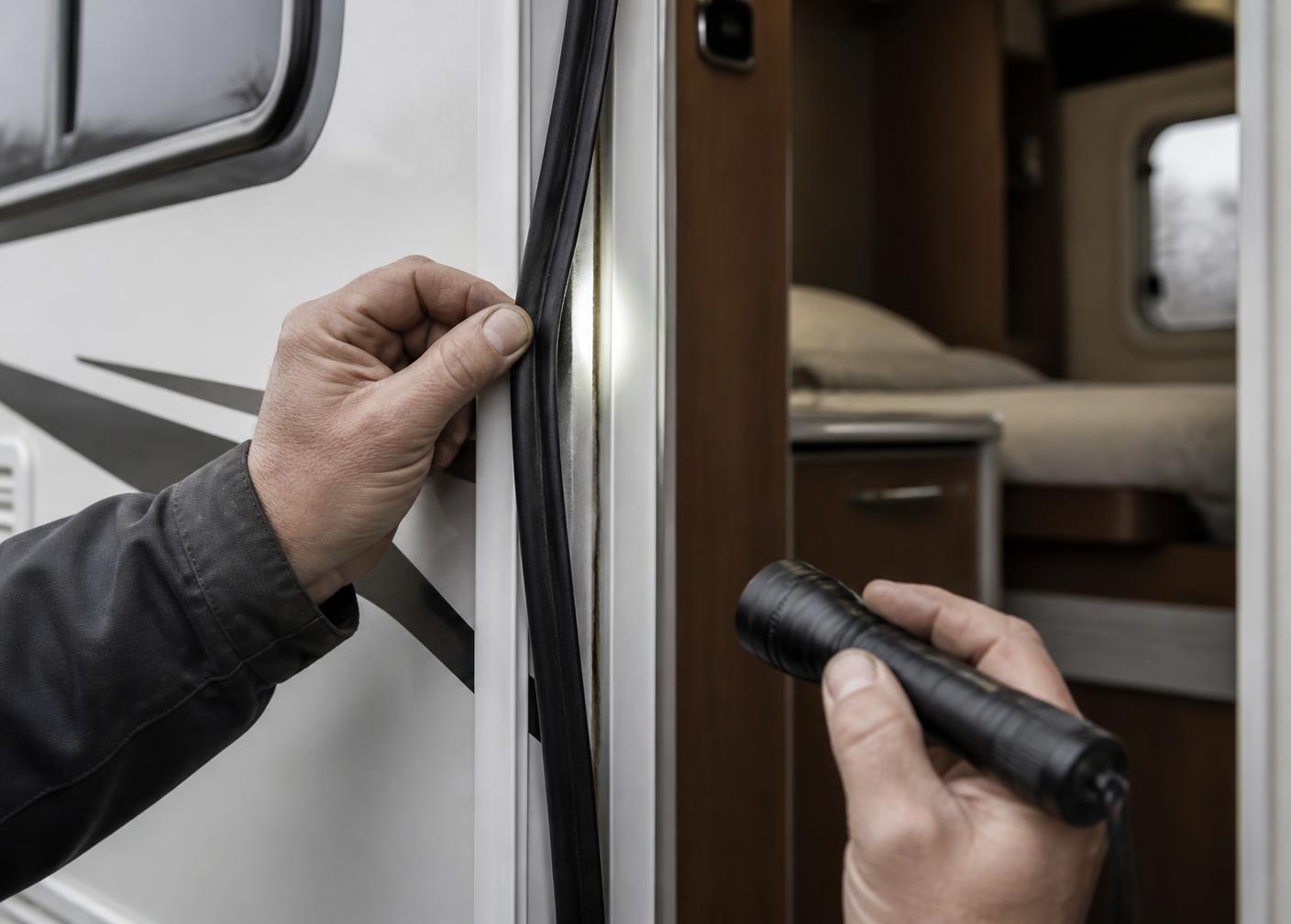
Walk the vehicle slowly and read the sealant. Original factory beads are even and continuous. Any section that is thicker, whiter or overlapping has been redone, and a reseal is only ever done for one reason. Ask when, by whom, and for the invoice.
Press gently along the lower panels and around the habitation door. Softness, ripples or a hollow sound indicate delamination behind the skin. This is not a bargaining point; it is a reason to walk away unless the price already assumes a full repanel.
Then the paperwork
A continuous habitation service history is worth more than low mileage. Gaps invalidate most water-ingress warranties, and a two-year gap on a five-year-old vehicle removes the manufacturer's remaining cover entirely.
Check the plated weights against the specification the seller is advertising. Retrofitted equipment — solar, towbars, bike racks, second batteries — reduces payload and is rarely reflected in the listing.
Finally, the mechanicals
Base vehicles in this sector are commercial vans and they are generally robust. Look for corrosion at the rear suspension mounts, check the cambelt record, and drive it far enough to reach operating temperature.
Habitation electrics deserve five minutes on their own: run the fridge on all three sources, test the water pump for cycling, and confirm the charger holds the leisure battery above 13.6V under load.
More guidance
Review
The compact coachbuilt, reconsidered
Six metres, a fixed island bed and 400kg of payload. We spent three weeks establishing whether the shortest coachbuilt in its class asks too much of its floorplan.
Comparison
Campervan or caravan: an honest comparison
The two most common shortlists in British road travel rarely overlap on paper, and almost always overlap in the buyer's head.