Review
The compact coachbuilt, reconsidered
Six metres, a fixed island bed and 400kg of payload. We spent three weeks establishing whether the shortest coachbuilt in its class asks too much of its floorplan.
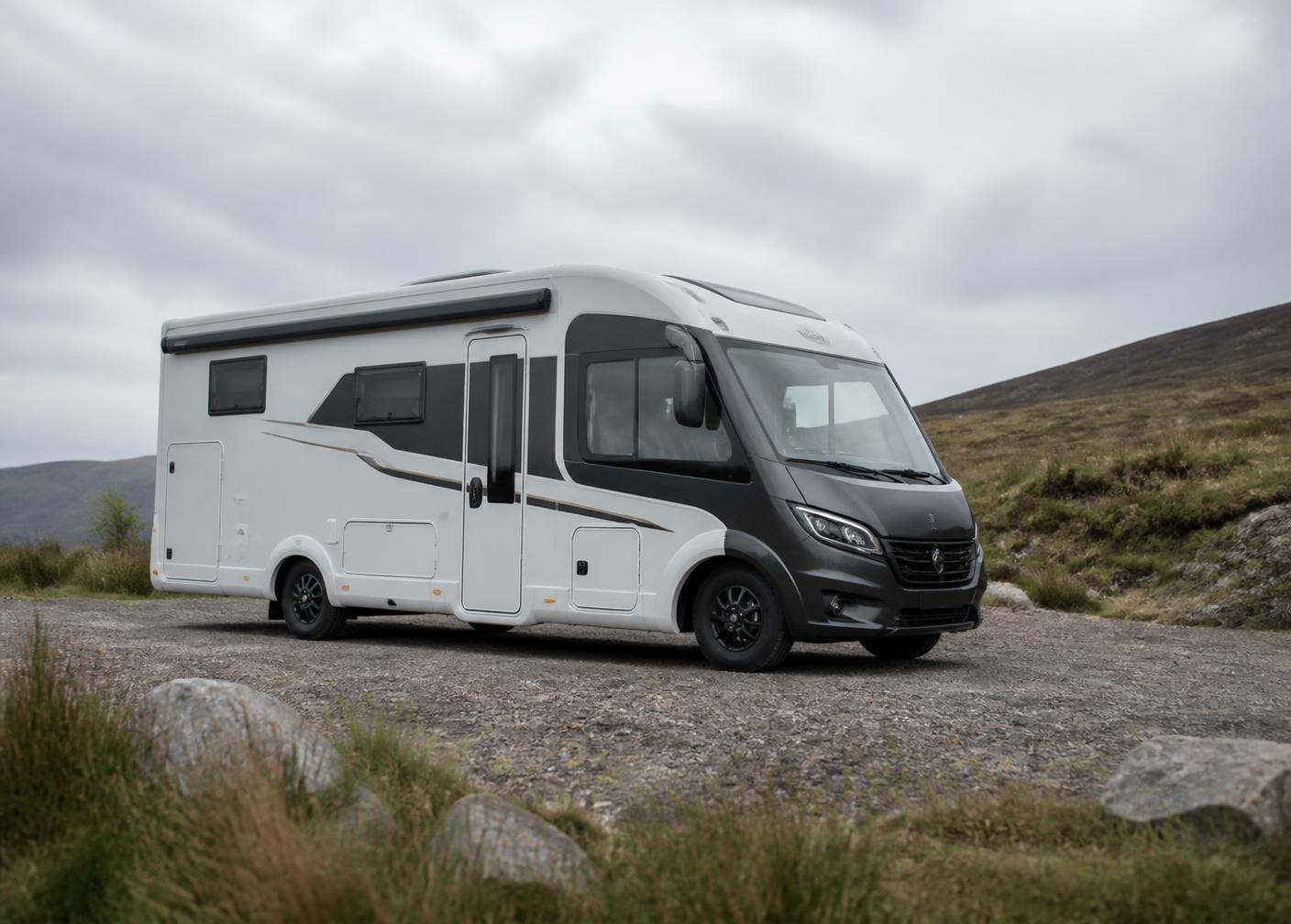
- Length
- 5.99m
- MTPLM
- 3,500kg
- Payload
- 412kg
- Berths
- 2 (4 travelling)
What it is
Short coachbuilts exist because buyers want a fixed bed without a seven-metre vehicle. The engineering problem is that a transverse island bed and a separate washroom consume the rear two metres, leaving the lounge and kitchen to share what is left. Most manufacturers resolve this by shrinking the kitchen. This one shrinks the washroom instead, and the decision defines the vehicle.
In practice the galley is genuinely usable: a three-burner hob, a 133-litre compressor fridge and enough worktop to prepare a meal without moving items twice. The washroom, by contrast, is a wet room with a folding basin. It works. It is not comfortable for two adults on consecutive mornings in November.
Living with it
We covered 1,340 miles, including four nights off-grid. The 95Ah lithium bank and 160W roof array held state of charge through overcast days without engine running, which is now the reasonable expectation rather than a selling point.
Heating is diesel-fired and quiet enough to sleep through. Condensation management is adequate, though the rear window drew moisture on cold mornings and the supplied blinds trap it. A £30 set of external covers solves this and should arguably be standard.
The numbers that matter
412kg of payload sounds ample until you subtract two adults, 100 litres of fresh water, a full gas locker, an awning and bicycles. Buyers routinely exceed plated weight without realising. Weigh the vehicle loaded, at a public weighbridge, before your first long trip.
Fuel consumption settled at 27.4mpg over the test at motorway speeds, falling to 23mpg on sustained gradients. Service intervals are two years or 30,000 miles on the base vehicle, annually on the habitation body.
More guidance
Buying guide
Buying used: the first hour of an inspection
Most expensive mistakes in the used market are visible within sixty minutes, if you know the order to look in.
Comparison
Campervan or caravan: an honest comparison
The two most common shortlists in British road travel rarely overlap on paper, and almost always overlap in the buyer's head.